

By Jane Kisha
When caught up in a chaotic crash scene involving blood, confusion, and multiple injuries, rescuers’ first instinct is to get victims to safety as quickly as possible. In this urgency, untrained Good Samaritans may overlook serious but less obvious risks, such as exposure to infected blood from multiple injured individuals. This blood can easily come into contact with a rescuer’s open wounds, eyes, mouth, or other vulnerable areas, creating a real risk of infection.
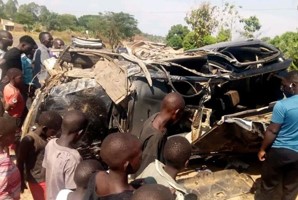
On 7 July 2026, at least 14 people were killed and 28 others injured in a head-on collision involving an Opit Travellers bus and a trailer along the Kampala–Gulu Highway in Omoro District. Less than a year earlier, on 22 October 2025, another devastating crash occurred along the same highway when a catastrophic collision involving two buses and two other vehicles claimed 46 lives and left several others injured.
Both incidents involved multiple fatalities and serious injuries, requiring urgent rescue efforts amid heavy bleeding, fractures, body-to-body contact, and sharp debris. The crashes occurred at night, in conditions of poor visibility and before trained emergency responders arrived, prompting local residents to rush to rescue survivors. In doing so, many Good Samaritans may have unintentionally exposed themselves to blood-borne infections and other health risks while providing lifesaving assistance.
This scenarios, along with many similar road crashes, illustrates how rescuers and victims may be exposed to HIV (Human Immunodeficiency Virus) and other blood-borne infections at crash scenes.
Dr. Hannington Muwaga, an orthopedic surgeon at Vision for Trauma Care in Africa in Mukono, explains:
“Imagine a situation where an HIV-positive person is travelling in the same vehicle as three HIV-negative passengers when a road crash occurs. If a piece of metal pierces the HIV-positive individual and another person is pierced by a different piece of metal, or if the same piece of metal injures both the HIV-positive and HIV-negative individuals one after the other, either scenario could potentially lead to HIV transmission. It is important to remember that HIV spreads only when infected blood enters another person’s bloodstream through an open wound. This risk extends not only to casualties but also to responders, especially untrained individuals acting as first aiders.”
He further explains that surviving a road crash does not always mean returning to life as it was before. Many survivors face life-changing consequences such as limb loss, spinal injuries, fractures, and permanent disabilities. In rare circumstances, some may also acquire HIV or other blood-borne infections if they are exposed to infected blood while rescuing victims or through direct blood-to-blood contact during the crash.
When Does the Risk of HIV Transmission Exist After a Road Crash?
After a road crash, the risk of HIV transmission exists only when blood-to-blood contact occurs, such as in the following situations:
- Assisting an injured person without gloves when both the rescuer and the injured person have open wounds.
- Exposure to blood from multiple victims at a crash scene.
- Use of unsterilized equipment during emergency response.
- Cuts or broken skin coming into contact with infected blood.
Important clarification: HIV does not spread simply because someone is injured or through casual physical contact. The virus must enter the bloodstream through open wounds, cuts, or mucous membranes, such as the eyes or mouth.
How High Is the Risk of Contracting HIV After a Crash Injury?
The risk of HIV transmission from a single blood exposure is relatively low, but it is not zero. The risk increases when:
- There is deep bleeding, a large volume of blood, or delayed treatment.
- The source person is HIV-positive and not receiving effective treatment.
- First responders or helpers have open cuts, wounds, or broken skin.
Why Are Crash Scenes Risky?
Road crashes often involve heavy bleeding, multiple injured people, untrained bystanders rushing to help, and a lack of gloves or other protective equipment. Good intentions without proper protection can unintentionally expose helpers, police officers, boda boda riders, and community members to HIV and other blood-borne infections such as hepatitis B and hepatitis C.
Preventing HIV Transmission at Crash Scenes
- Use protective barriers: Always wear gloves when handling injured persons, and cover your own cuts or wounds before providing assistance.
- Respond within your level of training: If you are untrained, avoid direct contact with blood whenever possible and ensure you have no open wounds before assisting. If you are trained, carefully manage casualties while minimizing unnecessary contact with blood.
- Strengthen emergency response: Equip ambulances, police officers, and first responders with personal protective equipment (PPE). Train boda boda riders, traffic police, and community members in basic first aid and infection prevention.
- Seek immediate medical care: Injured persons should be taken to a health facility as quickly as possible. Anyone who has been exposed to blood should seek immediate medical attention and be assessed for Post-Exposure Prophylaxis (PEP). PEP can significantly reduce the risk of HIV infection if started within 72 hours of exposure. It is available free of charge at government health facilities in Uganda and should be accessed as soon as possible.
When Should You Seek Medical Help Immediately?
Seek medical attention immediately if:
- Blood enters your eyes, mouth, or an open wound.
- You are cut while helping an injured person.
- You are unsure whether you were exposed to blood during a road crash.
Remember
Helping others after a road crash is commendable, but protecting yourself while providing assistance is equally important. Wearing appropriate protective equipment and seeking prompt medical care after any blood exposure can save lives and prevent HIV and other blood-borne infections.